Hey there! If you’ve ever scrolled through social media or chatted with friends and heard someone say “capping” and thought, what does that even mean?, you’re in the right place.
I’ve been there too confused and wondering if it’s a compliment, an insult, or just slang people throw around.
In this article, I’ll break down capping meaning slang in a way that’s super easy to understand, and I’ll share some real examples.
I’ve come across myself.
By the end, you’ll get why people say it, when it’s cool meaning slang, and maybe even sound a bit cooler using it in your own chats.
Stick with me I’ve got you covered!
🧠 What Does Blue Mean in Text?
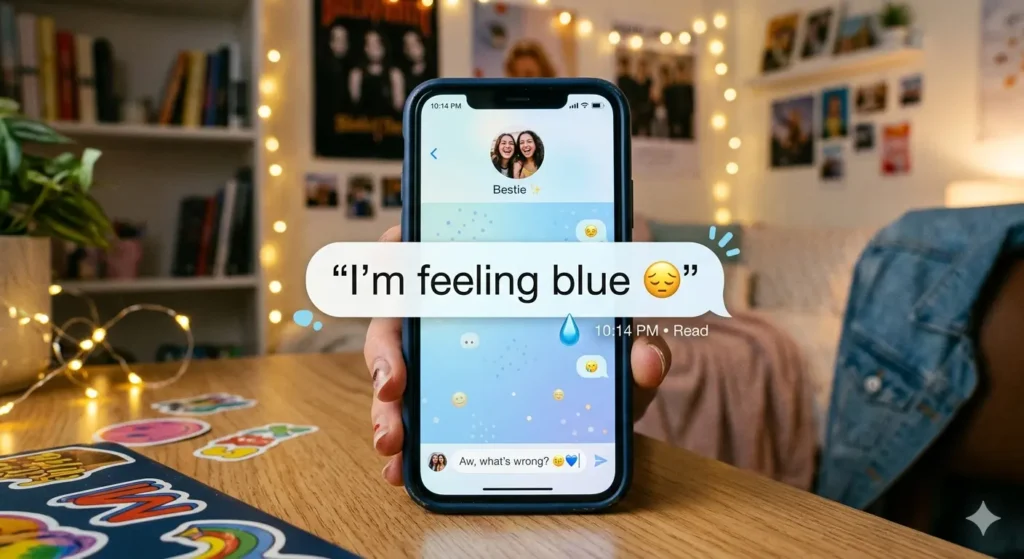
In slang, blue is used to describe a feeling of sadness, low energy, or emotional heaviness. It’s like saying you’re in a gloomy mood but keeping it casual and easy for friends to understand.
Example:
“I’ve been feeling blue all day… might just indulge some movies tonight 😔”
In short: Blue = Feeling sad = Casual way to express being down
📱 Where Is Blue Commonly Used?
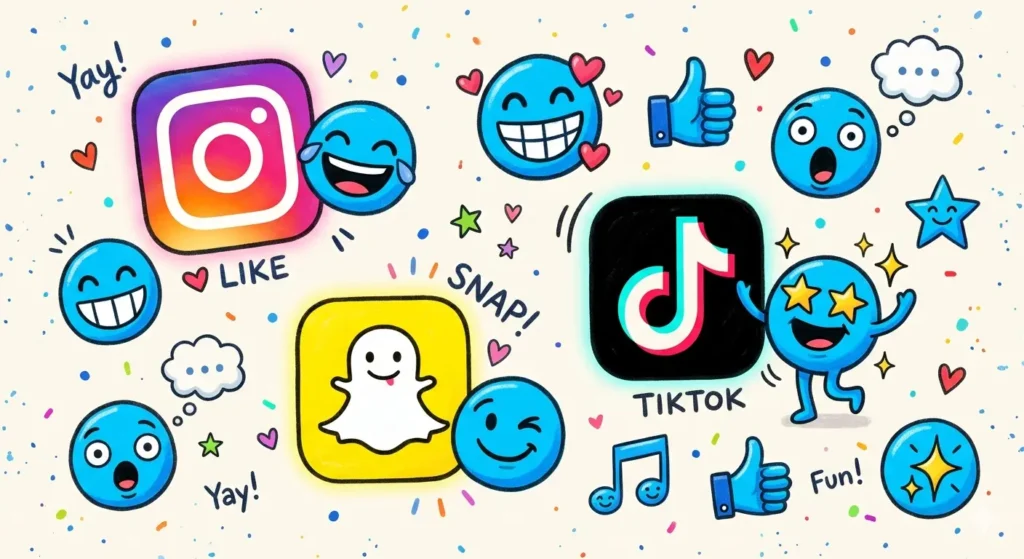
The slang blue pops up mostly in casual, social, and friendly contexts. Here’s where you’ll see it the most:
- Texting 💬 messaging friends about your mood
- Snapchat 👻 used in captions or status updates
- TikTok 🎵 often in comments or trending challenges expressing sadness
- Gaming Chats 🎮 when venting or sharing feelings casually
- Instagram Stories 📸 with emojis to express feeling down
Tone: Casual, social-media–friendly, relatable. Avoid using it in professional or formal situations.
💬 Examples of Blue in Conversation
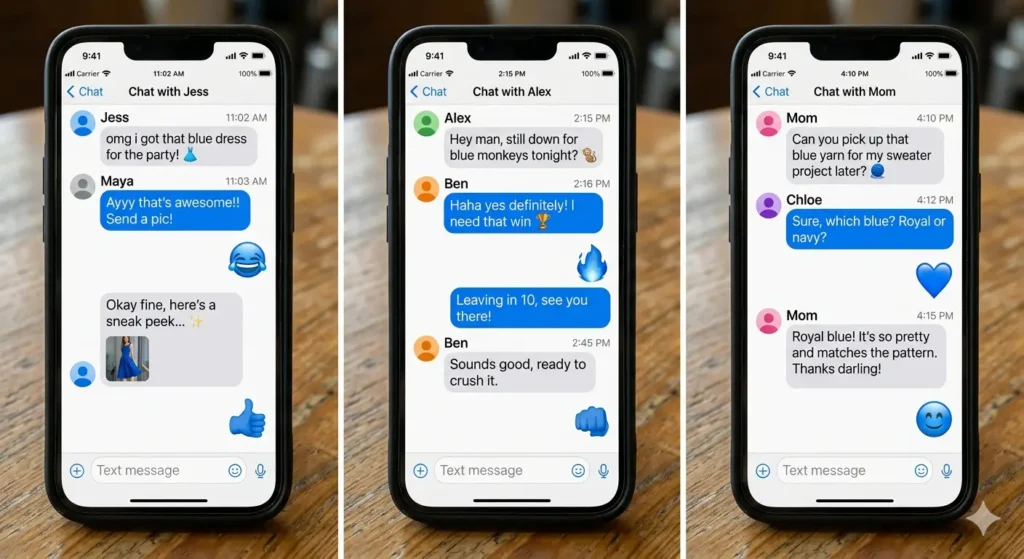
Here are some realistic texting examples to help you understand how “blue” is used:
- A: “Hey, why so quiet today?”
B: “Just feeling a bit blue 😔” - A: “Wanna hang out later?”
B: “Maybe… still blue from yesterday 😢” - A: “Everything okay?”
B: “Yeah… just blue, nothing serious 💙” - A: “Movie night?”
B: “Perfect, I’m blue and need cheering up 🎬” - A: “You’re usually so energetic!”
B: “I know, today I’m just blue 😕” - A: “Talk to me, friend”
B: “Thanks… I’ve been feeling blue lately 😞”
🕓 When to Use and When Not to Use Blue
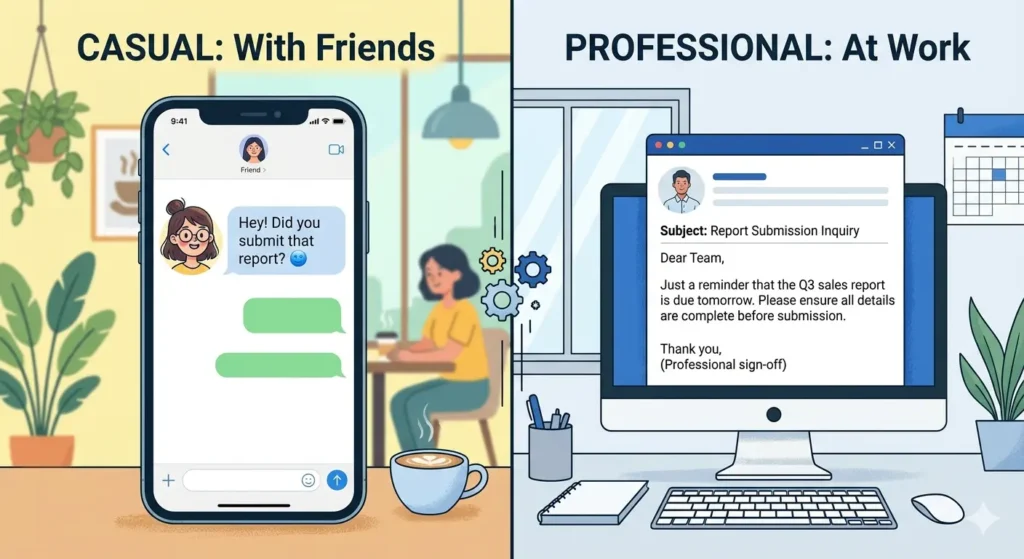
✅ When to Use Blue:
- Chatting with friends or peers
- Sharing casual emotional updates
- Expressing sadness without being dramatic
- Online posts about mood or feelings
❌ When Not to Use Blue:
- Formal emails or work messages
- Urgent situations requiring action
- Serious conversations about mental health (use direct words instead)
Comparison Table:
| Context | Example Phrase | Why It Works |
| Friend Chat | “No rush, feeling a bit blue 😄” | Casual & relatable |
| Work Chat | “I’m a bit under the weather” | Polite & professional |
| “Please note, I’m feeling unwell today” | Formal & clear |
🔄 Similar Slang Words or Alternatives
| Slang | Meaning | When to Use |
| Down | Feeling sad or low energy | Texts, casual chats |
| Moody | Easily irritable or sad | Social media, friends |
| Bluey | Lighthearted way to say blue | Friendly, informal |
| Sad AF | Stronger emphasis on sadness | Close friends, casual chats |
| Melancholy | Poetic/formal sadness | Artistic posts, writing |
| Lowkey | Feeling slightly sad | Casual texting |
❓ FAQs About Blue
Q1: Can “blue” mean something happy?
No, in slang, blue almost always refers to sadness or low mood.
Q2: Is it okay to use blue with strangers?
Yes, but it’s casual. Some strangers might not understand your tone.
Q3: Is blue formal enough for work emails?
Not really. Use professional language like “I’m feeling under the weather” instead.
Q4: Can “blue” be used romantically?
Yes, in a gentle, emotional context e.g., “I miss you, feeling blue 💙”
✅ Conclusion
The slang blue is a simple, friendly way to share your mood online or in texts.
It’s casual, relatable, and instantly understood among friends or social media followers.
Next time you feel a little down, you don’t need long explanations just a short “I’m blue 😔” will do the trick.

Theo Papadakis is a strategic thinker and writer with an academic background in research and analysis. He specializes in providing data-driven insights and thorough examinations of contemporary issues. Theo’s commitment to accuracy and depth makes his articles a trusted resource for our readers.