Ever come across someone saying “OT” in a chat and thought, Wait, what does that even mean?
Trust me, I’ve been there scrolling through messages, trying to make sense of slang that seems to pop up overnight.
Well, you’re in the right place! In this article, I’ll break down the OT meaning in a way that’s super easy to understand.
We’ll also look at how it’s used in everyday conversation so you don’t just memorize it you actually get it.
I’ve learned a few tips along the way about using slang naturally, and I’ll share them with you too.
By the end, phrases like “OT” and even cool meaning will feel completely familiar.
🧠 1. What Does OT Mean in Text?
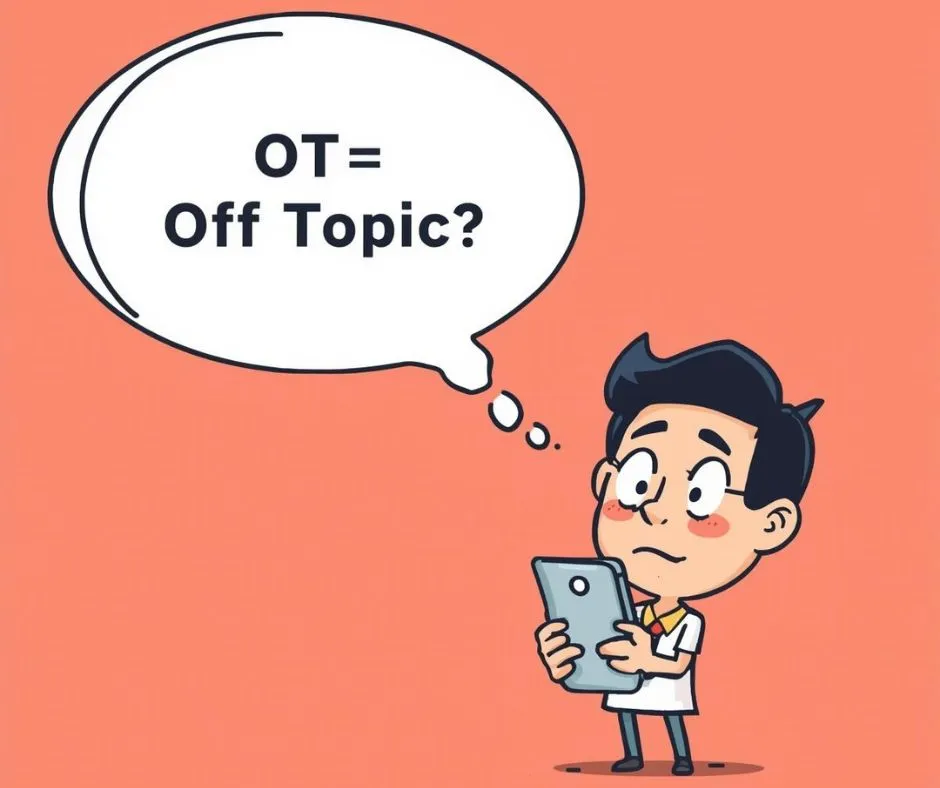
Full Form: OT = Off Topic
In simple words, OT is used when someone wants to point out that the discussion has drifted away from the main topic. It’s casual, friendly, and mostly used in online chats or social media forums.
Example:
A: “So, what did everyone think about the new game update?”
B: “OT, but did anyone see the new meme going around?”
In short: OT = Off Topic = Talking about something unrelated to the main discussion.
📱 2. Where Is OT Commonly Used?

OT pops up in many digital spaces where conversations happen fast and informally:
- 💬 Texting & Messaging Apps: WhatsApp, Messenger, iMessage
- 🎮 Gaming Chats: Discord, Steam, in-game team chat
- 📱 Social Media: Twitter, TikTok, Instagram comment threads
- 🖥️ Forums: Reddit, Quora, online communities
Tone: Casual, friendly, social-media–friendly, never formal. Think of it as a way to politely acknowledge a conversation detour without being rude.
💬 3. Examples of OT in Conversation
Here are some realistic ways OT shows up in chats:
1:
A: “Did you finish the project?”
B: “OT, but did you watch the new movie trailer?”
2:
A: “I think we should stick to the agenda.”
B: “OT, sorry… just saw something funny 😅”
3:
A: “Let’s discuss the budget tomorrow.”
B: “OT, is anyone up for coffee later?”
4:
A: “This essay is so long…”
B: “OT, but did you see the cat video I sent?”
5:
A: “When is the meeting?”
B: “OT, have you heard the latest music album?”
6:
A: “Focus on the task!”
B: “OT, but I think my Wi-Fi is acting up.”
🕓 4. When to Use and When Not to Use OT
✅ When to Use OT
- Friendly conversations with friends
- Group chats with casual discussions
- Gaming or social media forums
- When you want to politely switch topics
❌ When Not to Use OT
- Formal emails
- Workplace discussions with bosses
- Serious or urgent conversations
- Academic or official meetings
Comparison Table:
| Context | Example Phrase | Why It Works |
| Friend Chat | “No rush, OT 😄” | Casual & friendly |
| Work Chat | “Take your time.” | Polite & professional |
| “Please take your time to review this.” | Formal & clear |
🔄 5. Similar Slang Words or Alternatives
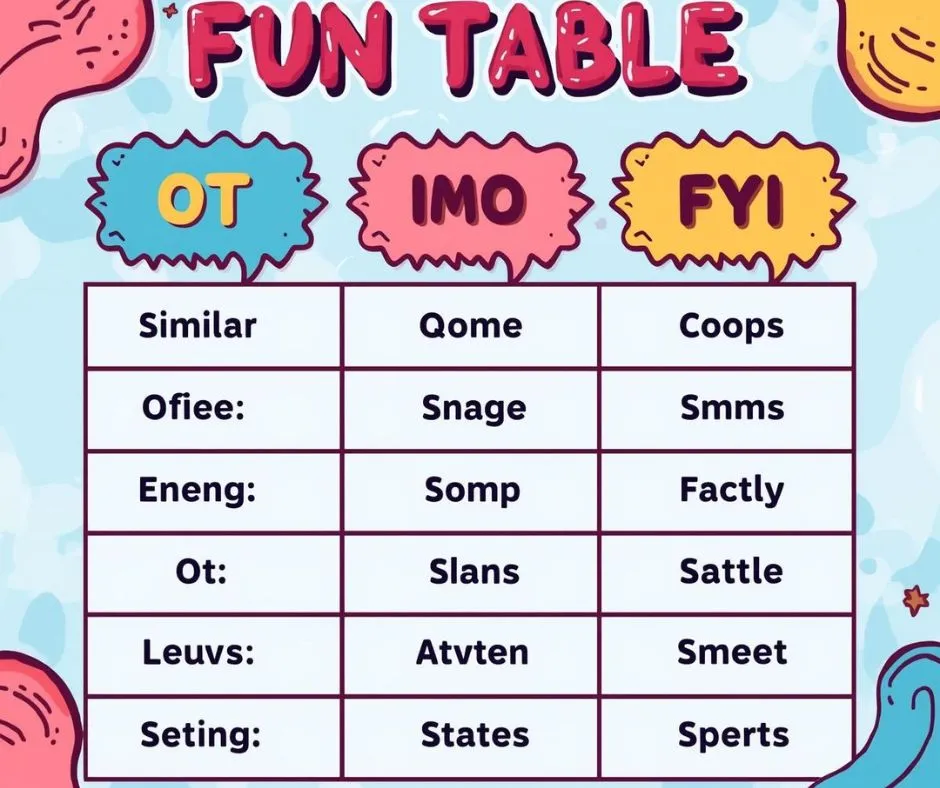
| Slang | Meaning | When to Use |
| OT | Off Topic | Casual chats, social media |
| IMO | In My Opinion | Sharing personal thoughts |
| FYI | For Your Information | Giving info politely |
| BRB | Be Right Back | Chatting online, temporary pause |
| TMI | Too Much Information | Casual warning about oversharing |
| NSFW | Not Safe for Work | Social media, forums |
| ICYMI | In Case You Missed It | Sharing updates casually |
❓FAQs About OT
Q1: Can OT be used in work chats?
A: Only if your workplace is casual. In formal emails or meetings, it’s better to use phrases like “This may be off-topic…”
Q2: Is OT rude?
A: Not at all! It’s polite. It shows you’re aware the topic is changing.
Q3: Can OT be used in texting with strangers?
A: Yes, but keep it friendly and avoid overusing it.
Q4: Is OT the same as derail?
A: Not exactly. OT is neutral and casual; “derail” can sound negative.
Q5: Are there emojis that go with OT?
A: People often pair it with 😅, 😂, or 👀 for a playful tone.
✅ Conclusion
Now you know that OT simply means “Off Topic”, and it’s your go-to slang for casual chats, social media threads, and gaming conversations. Using it properly shows you’re polite, aware, and in tune with the online community vibe. Next time a discussion drifts, you can throw in a friendly “OT 😄” and keep the conversation flowing naturally.

Theo Papadakis is a strategic thinker and writer with an academic background in research and analysis. He specializes in providing data-driven insights and thorough examinations of contemporary issues. Theo’s commitment to accuracy and depth makes his articles a trusted resource for our readers.