
Hey there! So, you’ve probably seen people texting or posting online and throwing around words like “homie” and wondered, what’s the deal with this slang?
I’ve been there too—scratching my head, trying to figure out what everyone really means.
That’s why I wanted to share everything I’ve learned about homie meaning slang in a way that actually makes sense.
Whether you’re chatting with friends, scrolling social media, or just curious about modern lingo, this guide will make it super easy to understand. By the end, you’ll feel confident using it yourself, and I’ll even sprinkle in a bit about cool meaning slang, so you get the full vibe.
1. What Does Homie Mean in Text?
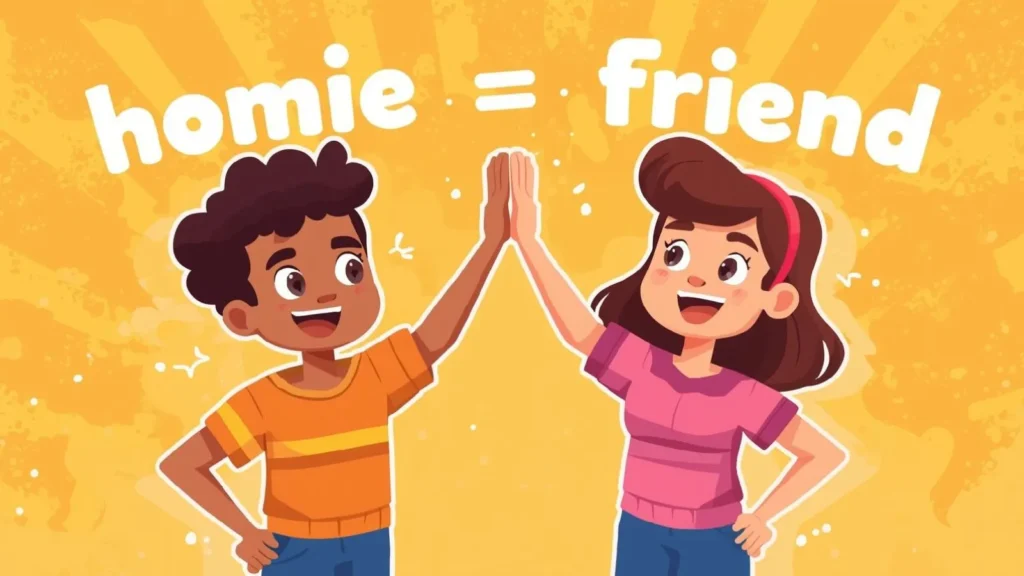
The word homie comes from American slang and originally referred to someone from your hometown or neighborhood. Over time, it evolved to simply mean a close friend or trusted buddy—someone you can rely on or hang out with.
Example Sentence:
“Hey, thanks for helping me move, you’re a real homie!”
In short:
Homie = Friend = Someone you trust and hang out with casually
2. Where Is Homie Commonly Used?

Homie is extremely popular in casual conversations, especially online and among younger generations. You’ll often see it in:
📱 Texting or WhatsApp chats — casual messages to friends
🎵 Social media captions — Instagram, TikTok, Twitter
🎮 Gaming chats — calling teammates or friends
🗣️ Everyday speech — informal conversations with peers
Tone: Super casual, friendly, and social-media–friendly.
Avoid using it in formal work emails or professional situations.
3. Examples of Homie in Conversation
Here are some realistic chat examples showing how homie is used:
1:
A: “Thanks for grabbing my hoodie yesterday 😅”
B: “No worries, homie! Always got you.”
2:
A: “Wanna hit the skate park later?”
B: “For sure, homie 😎”
3:
A: “I can’t believe you aced the test!”
B: “Haha, thanks homie!”
4:
A: “Need a ride to the concert?”
B: “Yes, homie, that’d be awesome 🚗”
5:
A: “You’re late again 😤”
B: “Sorry homie, traffic was intense!”
6:
A: “Pizza at my place?”
B: “Bet, homie 🍕”
4. When to Use and When Not to Use Homie
✅ When to Use:
- Friendly chats with close friends
- Casual social media posts
- Gaming or group chats
- Relaxed, informal situations
❌ When Not to Use:
- Formal or professional emails
- Serious discussions or arguments
- Academic or work reports
- Talking to strangers in a serious context
Comparison Table:
| Context | Example Phrase | Why It Works |
|---|---|---|
| Friend Chat | “No rush, homie 😄” | Casual & friendly |
| Work Chat | “Take your time.” | Polite & professional |
| “Please take your time to review this.” | Formal & clear |
5. Similar Slang Words or Alternatives
| Slang | Meaning | When to Use |
|---|---|---|
| Bro | Brother / friend | Friendly, casual chats |
| BFF | Best friend forever | Close friends |
| Mate | Friend | Common in UK/Australia |
| Fam | Family / close friends | Social media, texting |
| Buddy | Friend | Casual conversations |
FAQs About Homie
Q1: Is homie formal or casual?
It’s 100% casual. Avoid using it in professional or formal contexts.
Q2: Can I use homie in text messages only?
No, you can also use it in speech or social media captions.
Q3: Is homie considered flirty?
Not usually. It’s mostly friendly, not romantic.
Q4: Can I call someone I just met a homie?
It’s better to use homie for friends you already know well—it implies trust and familiarity.
Conclusion
Homie is a friendly, casual slang word that instantly makes conversations feel warmer. Whether you’re texting, posting online, or chatting with friends in person, it’s a fun way to refer to someone you trust and enjoy spending time with.
Just remember—it’s casual and social, so save it for relaxed conversations rather than formal or professional settings. Next time you want to show appreciation or friendship, drop a “homie” in your message—it’s simple, authentic, and relatable.

Alexei Ivanov is a fictional writer who works as an independent author and content creator. He writes novels, short stories, and creative articles, sharing his work through digital platforms and publications