Hey there! If you’ve been scrolling through texts, social posts, or chats and stumbled upon “ETA” and wondered, what does this even mean?, you’re in the right place.
I’ve been there too—feeling totally lost when someone drops slang like that mid-conversation.
In this article, I’m going to break down ETA meaning in a way that’s super easy to understand.
We’ll also explore how it’s used in everyday texting, so next time you see it, you’ll get it instantly.
Think of this as your friendly guide to decoding slang—because honestly, keeping up with modern texting can be a bit tricky, but with a little help, it’s actually kind of cool!
1. What Does ETA Mean in Text?
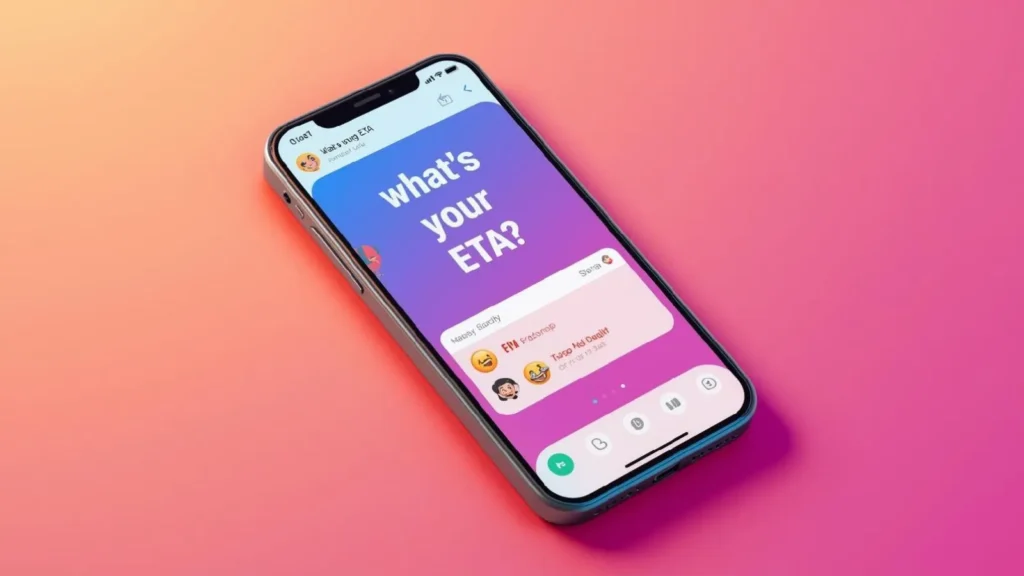
ETA stands for Estimated Time of Arrival. In everyday texting, it’s used to ask someone when they expect to reach a place or to let others know when you’ll get somewhere.
Example:
A: “Hey, what’s your ETA?”
B: “I’ll be there in 15 mins 😊”
In short: ETA = Estimated Time of Arrival = The time someone is expected to reach a place.
2. Where Is ETA Commonly Used?

ETA is widely used in casual conversations, social media, and even professional settings. Here’s where you’ll see it most:
- 📱 Texting / WhatsApp / iMessage – Asking friends or family when they’ll arrive.
- 🎮 Gaming chats – Coordinating arrival in multiplayer games.
- 🚗 Travel & Rideshare – Drivers or passengers checking arrival times.
- 📲 Snapchat / TikTok comments – Sometimes used humorously.
Tone: Casual, friendly, and social-media–friendly. Not too formal, but acceptable in work chat if the environment is relaxed.
3. Examples of ETA in Conversation

Here are some realistic texting examples:
A: “What’s your ETA to the party?”
B: “30 mins tops 😎”
A: “ETA on the delivery?”
B: “It should arrive around 5 pm 🕔”
A: “We’re leaving in 10, ETA?”
B: “On my way, 15 mins!”
A: “When will you be here?”
B: “ETA 20 mins, don’t start without me 😅”
A: “ETA to the meeting?”
B: “Running late, ETA 10 mins ⏳”
A: “Dinner ETA?”
B: “10 mins, hungry already 🍔”
4. When to Use and When Not to Use ETA

✅ When to Use:
- Friendly messages to friends or family
- Casual work chats where informal language is fine
- Gaming or social coordination
- Travel, rideshare, or delivery updates
❌ When Not to Use:
- Formal emails or business proposals
- Urgent or emergency situations
- Messages requiring polite or professional tone
Comparison Table:
| Context | Example Phrase | Why It Works |
| Friend Chat | “No rush, ETA when you can 😄” | Casual & friendly |
| Work Chat | “ETA on the report?” | Polite & professional |
| “Please provide your ETA for the project.” | Formal & clear |
5. Similar Slang Words or Alternatives
| Slang | Meaning | When to Use |
| BRB | Be Right Back | Casual, chatting online |
| ASAP | As Soon As Possible | Urgent messages, work or personal |
| TTYL | Talk To You Later | Friendly texts, informal |
| FYI | For Your Information | Work, casual updates |
| DM | Direct Message | Social media chats |
| RSVP | Respond Please | Event invitations, formal & informal |
FAQs About ETA
Q1: Can ETA be used in professional emails?
Yes, you can use ETA in professional emails, especially in work-related, logistics, or scheduling contexts. Just make sure the situation is semi-formal or that the recipient is familiar with the term.
Q2: Is ETA considered slang?
ETA started as a formal abbreviation, but people now use it casually in texting and everyday conversations. Today, it feels more informal, even though it still keeps its original meaning.
Q3: Is ETA used only in the US?
No, people use ETA worldwide. You’ll commonly see it in international travel, business communication, and online chats across many countries.
Q4: Can I use ETA when talking to strangers?
Yes, in professional or transactional contexts (e.g., delivery, taxi apps), it’s perfectly fine.
Conclusion
So next time you see “ETA” in a text, you’ll know exactly what it means: the estimated time someone will arrive. It’s casual, easy to use, and fits perfectly in friendly chats, travel updates, or gaming coordination. Remember, it’s informal, so skip it in very formal emails. Now you can text like a pro without pausing over slang! ⏳

Jasper Williams is a versatile contributor who explores the intersection of culture and modern society. His writing focuses on thought-provoking analysis and storytelling, aimed at inspiring readers to view the world through a different lens. Jasper’s unique voice brings a fresh and creative energy to every piece he writes.